03Fire Suppression Service
Links, CO2, nozzles and tags.
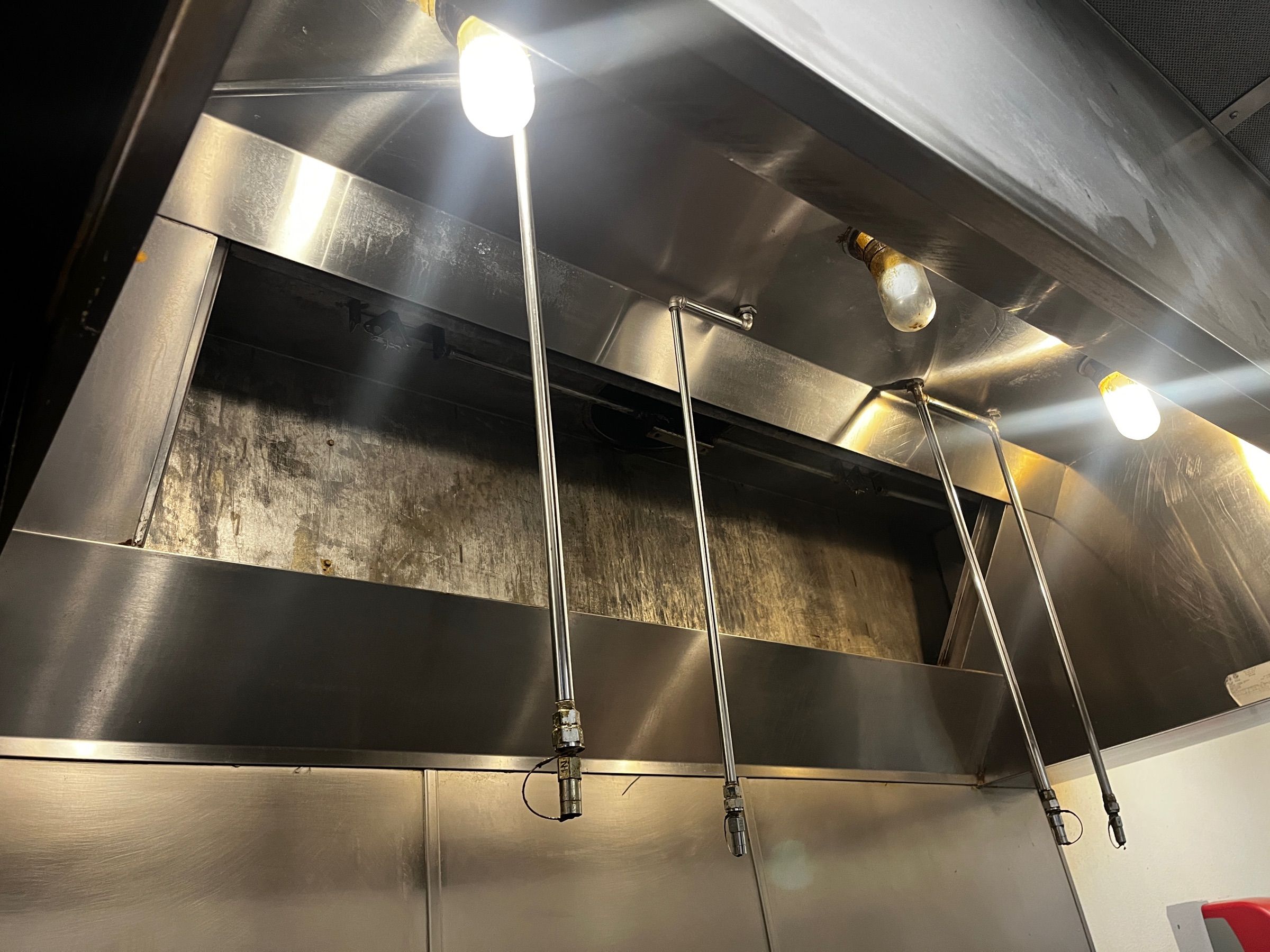
The regular service visit for your hood's fire suppression system. We change out the fusible links and the CO2 cartridge, make sure every nozzle is clear of grease, and put new tags on your fire extinguishers.
- Service
- 03 / 05
- System coverage
- Fusible links · Suppression tank & CO2 cartridge · Suppression nozzles · Fire extinguishers
Fig. 03 — Hood suppression system: tank, CO2 cartridge, nozzles, fusible links. Not to scale.
03.1Overview
The system over your cook line needs regular service.
The suppression system on your hood sits ready over the cooking equipment every hour the kitchen runs. Fusible links on the detection line hold it ready, a CO2 cartridge supplies the pressure that discharges it, and nozzles over each appliance direct the agent where it's needed. All of it lives in heat and grease.
A regular service visit keeps those parts current. We change out the fusible links, change out the CO2 cartridge, check that every nozzle is clear of grease, and install new tags on your fire extinguishers, so the fire equipment in your kitchen is handled in one visit.
How often the system needs service depends on the system, its manufacturer and your local fire authority. Many kitchens are on a six-month schedule, and we'll tell you what applies to yours.
System coverage
What fire suppression service covers in your kitchen.
- Suppression tank & CO2 cartridgeCovered
- Suppression nozzlesCovered
- Fusible linksCovered
- Fire extinguishersCovered
Highlighted in red on the drawing. The rest of the system is shown for context.
03.2Common problems
Signs your suppression service is due
Most of these you can check from the line.
- P–01
Service tag out of date
If the tag on the suppression system shows the last service was too long ago, the system is due.
- P–02
Grease-loaded fusible links
Links coated in grease sit in the hottest part of the hood. They get changed out, not wiped down.
- P–03
Greasy nozzles
Nozzles have to stay clear to do their job. Grease building up on the nozzle tips needs to be cleared.
- P–04
Expired extinguisher tags
Out-of-date tags on the extinguishers can be renewed on the same suppression service visit.
- P–05
Flagged on an inspection
If an inspection report flagged the links, the cartridge, the nozzles or the tags, a service visit takes care of them.
- P–06
Unknown service history
Took over an existing kitchen? If no one knows when the system was last serviced, plan on a visit before you open.
03.3What's included
What a service visit covers
Four jobs, every visit.
- 03.01
Fusible links changed out
Old links on the detection line removed and new links installed at each position.
- 03.02
CO2 cartridge changed out
The CO2 cartridge on the suppression system replaced with a new one.
- 03.03
Nozzles cleared of grease
Every nozzle over the cook line checked and cleared of grease.
- 03.04
New extinguisher tags
New tags installed on your fire extinguishers.
- 03.05
Scheduled around service
Done while the kitchen is closed, so the line isn't down during service.
03.4Why it matters
Why it matters
Every part, every visit.
- 01
Every part, every visit
Links, cartridge, nozzles and extinguisher tags handled in one visit, so nothing is left half-done.
- 02
Clear nozzles over the line
Grease cleared from every nozzle tip, so nothing sits in the way of where the agent needs to go.
- 03
Current tags across the kitchen
The suppression system and the extinguisher tags are taken care of on the same visit.
- 04
No hit to service
We work when the kitchen is closed and leave it ready for the next shift.
03.5Process
How a service visit runs
Kitchen closed, equipment cool, four jobs done.
Step 01
Schedule around your hours
We set a time when the kitchen is closed and the cooking equipment has cooled.
Step 02
Change the fusible links
Old links come out and new ones go in at each position on the detection line.
Step 03
Change the CO2 cartridge
The CO2 cartridge on the suppression system is replaced with a new one.
Step 04
Clear the nozzles
Every nozzle over the cook line is checked and cleared of grease.
Step 05
Tag the extinguishers
New tags go on your fire extinguishers before we leave.
03.6Questions
Suppression questions.
Straight answers to what owners and managers ask us most. Don't see yours? Call (818) 457-7828.
It depends on the system, its manufacturer and your local fire authority. Many commercial kitchens are serviced every six months, and we'll tell you what applies to your system.
Related services
Often paired with suppression.
04 — Extinguishers
Fire Extinguisher Service
Fire extinguisher servicing, replacement and hydrostatic testing, from the Class K unit at the cook line to the units by the doors.
View service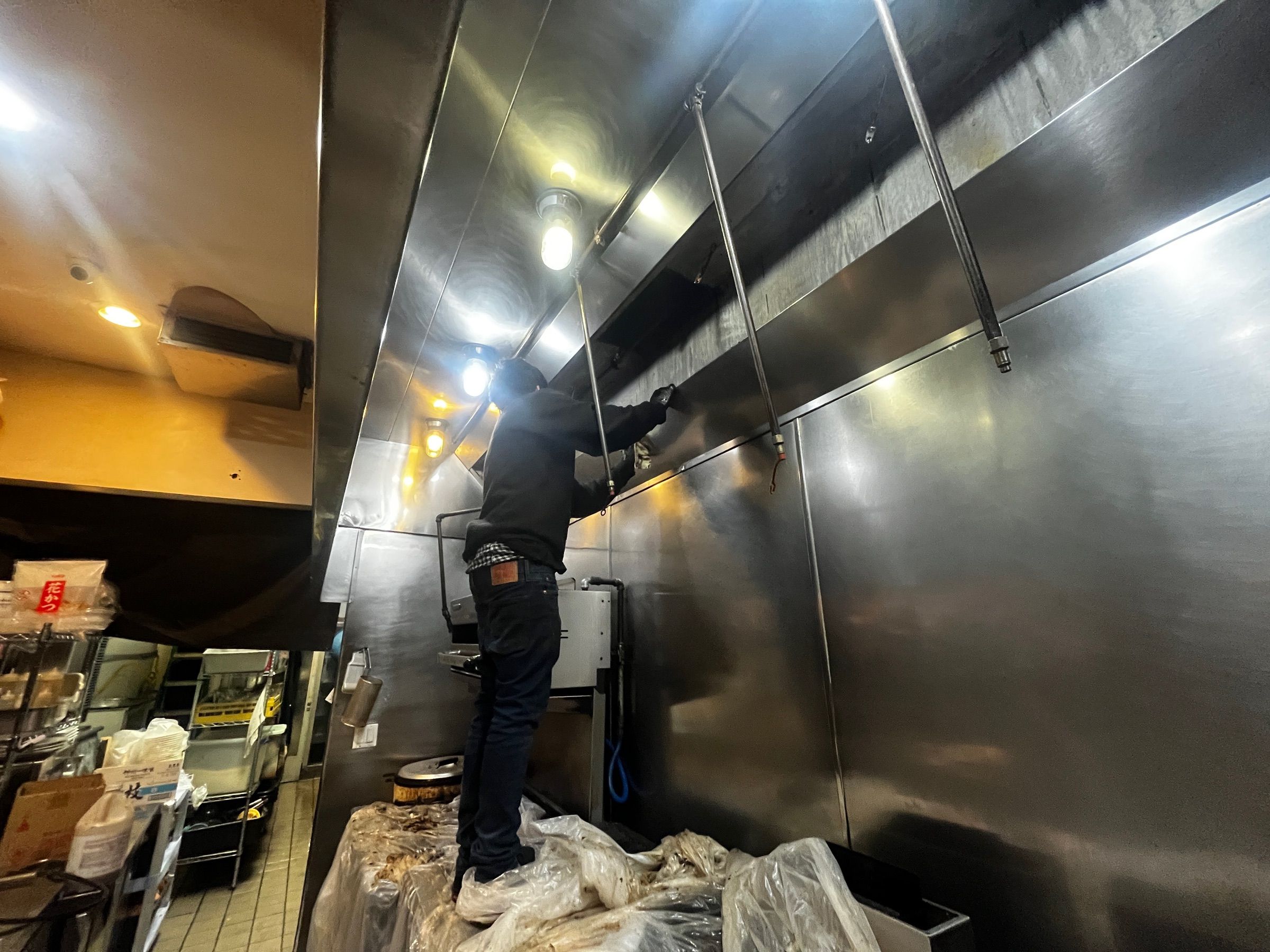
02 — Cleaning
Hood Cleaning
The entire hood cleaned top to bottom, all the grease around the exhaust fans, and the backsplash behind the line.
View service
Talk to the team
Tags Expired?Links Greasy?
Tell us about your hood and when the system was last serviced. We'll change out the links and the CO2 cartridge, clear the nozzles and tag your extinguishers.